
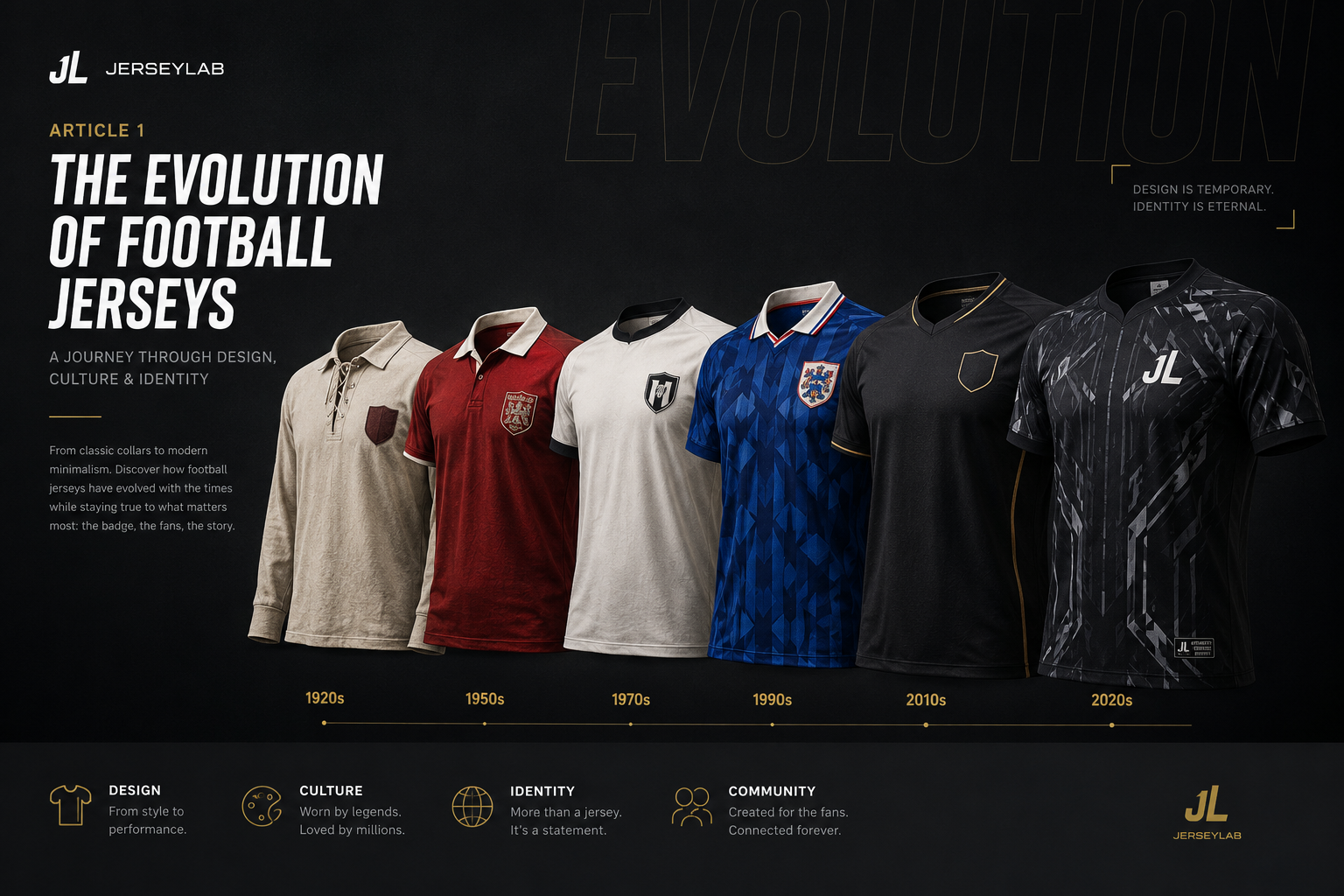
Football jerseys have undergone an incredible transformation throughout the history of the sport. What began as a simple piece of athletic equipment has evolved into a powerful symbol of identity, culture, creativity, and fashion. Today, football shirts are worn by professional athletes, passionate supporters, collectors, designers, and streetwear enthusiasts all around the world.
Modern football jerseys are no longer judged only by their performance on the pitch. Their visual appearance, storytelling, and cultural significance have become just as important. Every season, clubs and manufacturers release new designs that generate discussions among fans, attract media attention, and influence fashion trends. The football jersey has become one of the most recognizable and influential garments in modern sports culture.
Understanding how football jerseys evolved helps explain why they have become such an important part of the game and why projects like Jerseylab continue exploring new possibilities for football design.
The Origins of Football Jerseys
In the early days of football, jerseys were created for practical reasons rather than aesthetic ones. During the late nineteenth century and the beginning of the twentieth century, football was a developing sport with limited resources and little commercial influence.
Players typically wore thick cotton shirts that were often heavy and uncomfortable. These garments absorbed water easily, making them even heavier during rainy matches. The main objective was durability rather than style.
Most teams wore simple solid colors to distinguish themselves from their opponents. Logos, sponsor branding, and advanced graphics did not exist. Football clubs were more concerned with functionality than visual identity.
However, even during this period, colors began to play an important role. Club colors became symbols of local pride and tradition. Many of the colors used by famous clubs today were established more than a century ago and remain important elements of their identity.
Although early football jerseys were basic, they laid the foundations for what would eventually become one of the most iconic items in global sports culture.
The Development of Club Identity
As football grew in popularity throughout Europe and South America, clubs began developing stronger visual identities.
During the 1950s and 1960s, football teams increasingly recognized the importance of consistency in their appearance. Club badges became more common, helping supporters identify with their teams more easily.
At the same time, improvements in textile manufacturing allowed jerseys to become lighter and more comfortable. Although designs remained relatively simple, clubs started paying greater attention to presentation and branding.
The football jersey gradually became a symbol of belonging. Fans no longer saw it only as sports equipment. Wearing a club shirt became a way of expressing loyalty, community, and passion.
This period marked the beginning of the emotional connection between supporters and football apparel that continues today.
The Commercial Revolution
One of the most important moments in football jersey history came during the 1970s and 1980s.
Football was becoming increasingly commercialized, attracting larger audiences, television coverage, and corporate sponsorships. Sportswear manufacturers realized the marketing potential of football and began investing heavily in the sport.
For the first time, sponsor logos appeared on football shirts. This decision transformed jerseys forever.
What had once been purely sporting equipment became a commercial platform capable of reaching millions of viewers around the world. Sponsor branding generated new revenue streams for clubs and helped finance the rapid growth of professional football.
Manufacturers also started competing to create distinctive designs. Different brands introduced unique templates, collars, patterns, and color combinations to help teams stand out.
As football became more global, jersey design became more ambitious. Clubs recognized that visual identity was an important part of their image and reputation.
The Golden Age of Football Shirt Design
For many supporters and collectors, the 1990s remain the most creative period in football jersey history.
Unlike today’s minimalist trends, the jerseys of the 1990s embraced experimentation. Designers were willing to take risks and create bold visual statements.
This era introduced:
- Geometric graphics
- Bright colors
- Oversized patterns
- Distinctive collars
- Unique sponsor placements
- Creative textures
Many shirts from this period are still considered iconic today. Retro football jerseys have become highly collectible because of their originality and strong visual character.
The popularity of vintage football shirts demonstrates how important design has become within football culture. Fans are not only interested in the sporting achievements associated with these jerseys but also in their aesthetic qualities.
The 1990s showed that football shirts could be both functional and artistic.
The Impact of Technology
As football entered the twenty-first century, technology began transforming jersey design in entirely new ways.
Modern football shirts are dramatically different from their historical predecessors. Advances in textile engineering have allowed manufacturers to create garments that are lighter, more breathable, and more comfortable than ever before.
Today’s jerseys are designed to optimize athletic performance. Materials help regulate body temperature, improve ventilation, and enhance player comfort during intense matches.
Technology has also revolutionized the creative process itself.
Designers now use advanced digital software to experiment with graphics, textures, and color combinations before producing physical prototypes. Complex visual effects that would have been impossible decades ago can now be integrated seamlessly into football apparel.
Some modern jerseys feature:
- Heat-pressed details
- Laser-cut ventilation zones
- Digital patterns
- Textured surfaces
- Sustainable materials
- Performance-enhancing fabrics
This combination of technology and creativity has opened entirely new possibilities for football design.
Football Jerseys Enter Fashion
Perhaps the most significant development in recent years has been the growing relationship between football and fashion.
Football shirts are no longer worn exclusively by supporters attending matches. They have become part of everyday fashion culture.
Streetwear played a major role in this transformation.
Many fashion enthusiasts appreciate football jerseys because of their strong visual identity. Unlike plain clothing, football shirts feature bold graphics, unique colors, and recognizable branding that make them stand out.
The rise of social media accelerated this trend. Platforms such as Instagram and TikTok allowed users to share creative outfits featuring football jerseys. As a result, football fashion reached audiences far beyond traditional supporters.
Vintage football shirts became especially popular because of their originality and nostalgic appeal. Many people wear retro jerseys not because they support a specific team but because they appreciate the design itself.
Today, football jerseys are commonly seen in:
- Streetwear culture
- Music videos
- Fashion photography
- Social media content
- Creative industries
- Everyday casual fashion
This cultural shift has transformed football shirts into lifestyle products.
The Rise of Concept Jersey Design
Another exciting development is the growth of concept football jersey culture.
Concept jerseys are not limited by official club guidelines or commercial restrictions. Designers can explore creative ideas freely, experimenting with colors, patterns, and futuristic aesthetics.
This movement has gained popularity online, where creators share original football shirt concepts inspired by technology, gaming, architecture, and digital art.
Projects like Jerseylab represent this new generation of football design.
Instead of simply reproducing existing trends, concept designers imagine what football jerseys could become in the future. They use creativity as a tool to explore new possibilities and challenge conventional design rules.
Artificial intelligence and digital design technologies have accelerated this process, allowing designers to generate and refine concepts more efficiently than ever before.
The Future of Football Jersey Design
The future of football jersey design looks incredibly exciting.
As technology continues advancing, football shirts will likely become even more innovative. Designers may incorporate sustainable materials, advanced customization options, and interactive digital features.
Artificial intelligence will continue influencing the creative process, helping designers generate unique concepts and explore new visual directions.
Fashion will also remain a major influence. The relationship between football, streetwear, and digital culture continues growing stronger each year.
Future football jerseys may combine:
- High-performance technology
- Sustainable manufacturing
- Fashion-inspired aesthetics
- Digital customization
- Creative storytelling
The football shirt will continue evolving far beyond its original purpose.
Conclusion
Football jerseys have come a long way from the simple cotton shirts worn in the early days of the sport. Over time, they have become symbols of identity, creativity, culture, and innovation.
Every era has contributed something unique to their evolution. From the introduction of club branding to the bold experimentation of the 1990s, from modern performance technology to contemporary fashion influences, football jerseys have constantly adapted to changing times.
Today, they represent much more than sportswear. They are visual statements that connect people to clubs, communities, memories, and ideas.
As projects like Jerseylab continue exploring the future of football design, one thing remains clear: the evolution of the football jersey is far from over.
References & Further Reading
Goal.com
FIFA Official Website
Classic Football Shirts
The Football Attic
Adidas Football Stories
Nike Football Innovation